

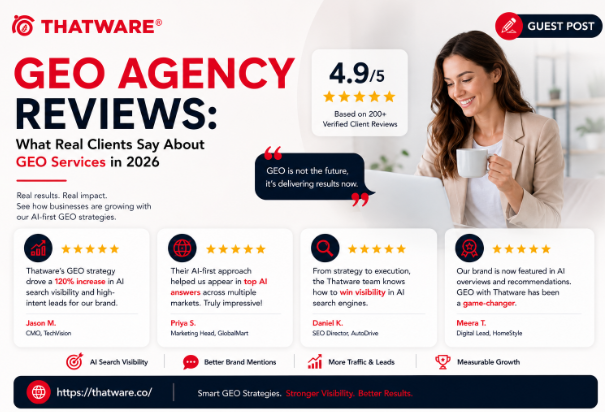
The GEO agency market has matured quickly. A year or two ago, most agencies claiming GEO expertise were essentially running rebranded SEO programs with some AI-flavored language added to the deck. Today, there’s a genuine distinction between firms that have built real GEO capabilities and those that haven’t — and clients who’ve gone through the experience of working with both can tell the difference clearly.
This piece is about what that difference looks like from the client side: what genuine GEO delivery involves, what warning signs look like in practice, and what the outcome of successful GEO engagement actually feels like.
What Clients Say About Working With GEO Agencies
The pattern that comes through consistently in client accounts of successful GEO engagements is this: the work felt more like a strategic partnership than a vendor relationship. The agencies that delivered real results were ones that understood the client’s business deeply — not just their search metrics — and built programs that connected GEO strategy to actual business outcomes.
“They started by understanding what our customers were actually asking AI systems before they engaged with us,” one SaaS marketing director describes. “That research shaped everything — the content strategy, the entity work, the off-site placement targets. It wasn’t just about getting our brand to show up. It was about showing up in the right context for the right queries.”
This business-first orientation is something that distinguishes genuine GEO practitioners from those retrofitting older frameworks. The KPIs in a real GEO engagement aren’t just query appearance rates — they’re connected to pipeline influence, brand recognition among target audiences, and the quality of how the brand is represented in AI responses, not just the frequency.
Common Disappointments in GEO Engagements
The disappointments clients describe cluster around a few recognizable patterns.
The most common: agencies that deliver “AI-optimized content” that’s essentially the same content they were producing before, with FAQ sections added and some schema markup applied. This work isn’t worthless — FAQ schema and structured data are genuine GEO building blocks — but clients who were expecting a fundamentally different strategic approach often feel they’ve been sold something more than was delivered.
A close second: agencies that can’t explain their reasoning. GEO strategy involves judgment calls — what content to prioritize, which query types to target, how to balance on-site and off-site work — and clients working with less capable agencies often report feeling like these decisions happened in a black box. The inability to explain why specific content was produced, or why a particular off-site placement was pursued, is a sign that the strategy isn’t as deliberate as it should be.
Third: agencies that over-promise on timeline. GEO results take time — typically three to six months before meaningful AI citation patterns start to shift, and longer for significant competitive repositioning. Agencies that set expectations of rapid results are either naive about how this work actually behaves or are deliberately overselling.
What the Technical Work Actually Looks Like
Clients working with genuinely capable GEO agencies describe a technical depth that goes well beyond content and schema. Entity audits that map the brand’s representation across hundreds of external sources. Semantic gap analysis that identifies the specific questions in the brand’s domain that competitors are currently answering better. Structured data implementations that cover not just the obvious schema types but the less common ones that are specifically relevant to the brand’s category.
The off-site work stands out in particular. Genuine GEO agencies aren’t just producing content and hoping it gets picked up — they have systematic approaches to placing content in the specific publications, directories, and platforms that carry authority in their clients’ categories. They understand which third-party sources AI systems weight most heavily for specific topic areas and actively target placements in those sources.
GEO services reviews from clients in competitive verticals — healthcare, legal, financial services — consistently highlight this targeted off-site work as the most distinctive element of serious GEO engagements. Anyone can write content. Building the specific web of references that makes an AI system treat a brand as authoritative requires a more sophisticated operation.
Metrics That Actually Matter
Measuring GEO results is evolving, and clients who’ve been through successful engagements have developed nuanced views on what metrics matter.
AI citation frequency — how often the brand appears in responses to target queries — is the most direct measure and the one clients care most about. But sophisticated clients are increasingly tracking not just frequency but quality of representation: how is the brand described when it appears, what context surrounds the citation, is the positioning accurate and favorable.
Indirect metrics also matter: brand mention velocity in third-party content, growth in direct traffic from users who’ve encountered the brand in AI contexts, and anecdotal signals from sales teams who report prospects arriving with more specific, pre-formed understandings of the brand’s positioning.
Traditional SEO metrics don’t disappear — organic traffic, featured snippet appearances, search ranking trends — but they’re supplemented by this new layer of AI visibility measurement.
The Retainer Relationship That Works
Clients who describe productive long-term GEO agency relationships consistently point to a few structural elements that made them work.
Regular, substantive reporting that explains performance in business terms, not just metric movements. Strategic review meetings (not just status updates) where the agency brings new analysis and recommendations. Clear ownership of specific deliverables with timelines. And genuine responsiveness when market conditions change — the ability to pivot strategy quickly when a new AI platform emerges, or when a competitor makes a move that changes the landscape.
The agencies that deliver this don’t just execute a pre-defined program — they stay current on the GEO landscape (which is changing rapidly) and bring those updates to clients proactively. The GEO playbook of early 2024 is substantially different from what’s working in 2026, and agencies that haven’t kept pace are delivering yesterday’s strategy.
Choosing Based on Fit, Not Just Capability
One thing that comes through clearly in client accounts of GEO engagements is that fit matters as much as technical capability. A highly capable agency that doesn’t understand your industry, your competitive dynamics, or your organizational constraints will produce technically sound work that misses strategically.
The best GEO engagements tend to involve agencies that either have genuine vertical expertise in the client’s category or invest heavily in learning it before starting to execute. The content strategy, entity work, and off-site placement targets in healthcare look fundamentally different from those in SaaS or retail — and an agency that applies a generic program to these different categories is leaving significant performance on the table.
Top GEO agencies are honest about where they have category depth and where they don’t. That honesty is itself a quality signal — and asking directly about category experience is one of the best ways to separate the genuinely capable agencies from the ones selling a program that worked somewhere and is being replicated everywhere.
The market for GEO services is maturing. Client expectations are rising, measurement is improving, and the gap between capable and incapable practitioners is becoming clearer. For brands evaluating GEO agency relationships in 2026, the landscape is better than it was — but the due diligence still matters.