

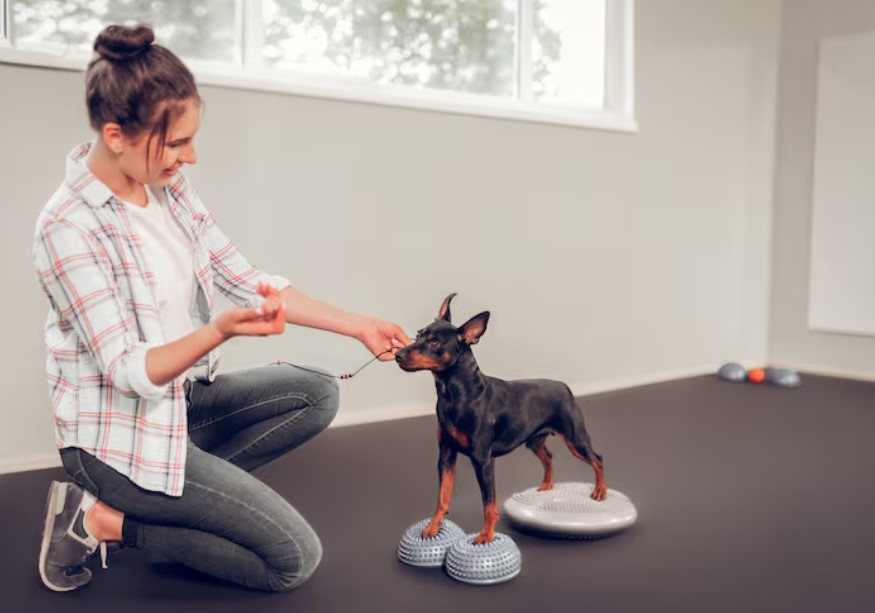
A regular ball can keep a dog busy for a few minutes. An interactive toy asks the dog to sniff, push, pull, chase, search, or solve a problem before receiving a reward.
That extra challenge is what makes interactive dog toys valuable. They give dogs an appropriate way to use natural behaviors while supporting mental activity, movement, confidence, and healthy eating habits.
However, one toy will not suit every dog. A gentle senior, a curious puppy, and a powerful adult chewer need different materials, sizes, and difficulty levels.
At a Glance: Interactive dog toys encourage dogs to solve problems, search for food, chase moving objects, or play with people. They can reduce boredom, slow fast eating, support physical activity, and make daily routines more engaging. Select a toy based on your dog’s size, play style, experience, and chewing strength.
What Are Interactive Dog Toys?
Interactive toys for dogs require active participation. Instead of simply holding or chewing the toy, the dog must perform an action to continue the game or reach a reward.
Common options include:
-
Treat-dispensing toys
-
Food puzzle boards
-
Snuffle mats
-
Rolling feeders
-
Tug toys
-
Hide-and-seek plush toys
-
Motion-activated balls
-
Fetch launchers
-
Scent games
-
Sliding and lifting puzzles
Some toys allow independent play, while others require a person to control the game. Both types can be useful.
Independent toys help during quiet periods, but owner-led games offer social interaction and clearer control over safety, intensity, and duration.
How Interactive Toys Support Mental Health
They Encourage Problem-Solving
A puzzle toy asks a dog to work out how to move a lid, roll a container, lift a piece, or follow a scent to reach food.
This type of challenge exercises the brain. VCA Animal Hospitals explains that foraging and activity toys can provide mental and physical exercise while allowing dogs to perform natural food-seeking behaviors.
The challenge should feel achievable. A toy that is too simple may lose the dog’s interest, while one that is too difficult may cause frustration.
Begin with an easy setup. Leave compartments partly open, use visible treats, or demonstrate how the toy moves. Increase the difficulty after the dog understands the basic task.
They Provide an Outlet for Natural Behaviors
Dogs naturally sniff, search, chew, chase, carry, pull, and investigate objects. Interactive toys provide safer ways to express these behaviors at home.
A snuffle mat supports sniffing and foraging. A tug toy allows pulling and controlled social play. A rolling dispenser encourages chasing and problem-solving.
VCA notes that enrichment can help dogs perform natural behaviors such as foraging, hunting for food, playing, and sniffing.
Providing a suitable outlet does not guarantee that every unwanted behavior will disappear, but it can make the dog’s daily routine more satisfying.
They Can Reduce Boredom
Dogs may become restless when they receive physical exercise but little mental activity. Common signs include pacing, attention-seeking, stealing objects, excessive barking, or repeatedly bothering family members.
Interactive dog toys can add variety to the day. A food puzzle during breakfast, a short tug session in the afternoon, and a scent game in the evening offer different kinds of engagement.
However, toys should not replace walks, training, social contact, or veterinary care. Sudden destructive behavior, anxiety, or major activity changes may have a medical or behavioral cause.
They Can Build Confidence
Some cautious dogs gain confidence by solving easy problems and earning rewards.
For example, a nervous dog may hesitate to approach a rolling toy. Placing treats around it before putting food inside allows the dog to investigate without pressure. Each successful interaction makes the object feel more predictable.
Never force a worried dog toward a moving, noisy, or unfamiliar toy. Let the dog approach at their own pace.
How Interactive Toys Support Physical Health
They Encourage Movement
Rolling feeders, fetch toys, tug toys, and moving balls encourage dogs to walk, turn, chase, pull, or change direction.
The amount of exercise depends on the toy and the dog. A puzzle board mainly provides mental work, while a fetch or chase toy may involve more running.
AKC guidance describes play as a way to provide both physical exercise and mental stimulation.
Interactive play should match the dog’s age, fitness, and health. Puppies, senior dogs, overweight dogs, and dogs with joint or breathing problems may need shorter, lower-impact sessions.
They Can Slow Down Mealtimes
Food-dispensing toys release kibble gradually instead of allowing a dog to swallow the entire meal from an open bowl.
The ASPCA recommends food puzzles as a way to slow eating while providing mental stimulation.
Use part of the dog’s measured daily food rather than adding extra treats. This turns an ordinary meal into an activity without automatically increasing calories.
Wash food toys after use, especially when they contain wet food, yogurt, meat, or other moist ingredients.
They May Support Weight Management
Interactive feeders can make a measured portion last longer and require light activity to obtain it.
They do not cause weight loss on their own. Weight depends largely on total calorie intake, food portions, treats, health, and overall activity.
Measure the amount placed inside each toy. A small puzzle filled several times per day can quietly add hundreds of extra calories if the food is not deducted from regular meals.
Types of Interactive Toys for Dogs
|
Toy Type |
Best For |
Main Benefit |
Main Concern |
|
Treat-dispensing toy |
Food-motivated dogs |
Mental work and slower eating |
Extra calories |
|
Puzzle board |
Dogs that enjoy solving tasks |
Problem-solving practice |
Can cause frustration if too hard |
|
Snuffle mat |
Dogs that enjoy sniffing |
Encourages natural foraging |
Fabric may be chewed |
|
Tug toy |
Social and energetic dogs |
Exercise and owner interaction |
Requires controlled play |
|
Rolling feeder |
Fast eaters and active dogs |
Movement while eating |
May be noisy on hard floors |
|
Hide-and-seek plush |
Gentle dogs |
Searching and carrying |
Not suited to destructive chewers |
|
Motion toy |
Dogs interested in movement |
Encourages chasing |
Noise may frighten some dogs |
|
Fetch toy |
Dogs that enjoy retrieving |
Running and social play |
Repetitive impact may affect joints |
The best interactive dog toys match how the individual dog prefers to play. A toy with excellent reviews may still fail if it does not fit your dog’s instincts.
How to Choose the Best Interactive Dog Toys
Match the Toy to the Dog’s Play Style
Watch what your dog already enjoys.
A dog that constantly sniffs may prefer a snuffle mat or hidden-treat game. A retriever may enjoy fetch and search toys. A dog that likes using paws may prefer sliding puzzles.
Dogs that tear plush toys apart need tougher options and close supervision.
Choose the Correct Size
A toy should be too large to swallow but comfortable to carry and manipulate.
When selecting large dog toys, do not rely only on a product label that says “large.” Check the dimensions and compare them with your dog’s mouth, head, and chewing strength.
The ASPCA warns that toys or chews that are too small or break into fragments may cause choking or intestinal blockage.
Consider Chewing Strength
No toy is indestructible. Even heavy-duty toys can fail when used by a determined chewer.
Choose materials designed for your dog’s chewing level and inspect toys before every session. Remove them if you notice deep cracks, loose fabric, exposed stuffing, sharp edges, or missing pieces.
Plush puzzles may work well for gentle dogs but are poor choices for dogs that immediately rip seams.
Select the Right Difficulty
Interactive puzzles are often sold in different difficulty levels. Start with a beginner design even if your dog seems intelligent.
A dog must first learn that moving parts produces a reward. Once the dog solves the toy quickly, increase the challenge by closing more compartments or using a more advanced design.
Expert tip: Do not increase difficulty by packing food so tightly that it becomes impossible to remove. Make the task mentally harder, not physically frustrating.
Check Cleaning Requirements
Food residue can collect inside grooves, corners, and moving parts.
Look for toys that can be opened fully and washed. Check whether the item is dishwasher-safe or requires handwashing.
Avoid putting wet ingredients inside a toy that cannot be cleaned thoroughly.
Introducing a New Interactive Toy
Place the toy on the floor and let your dog investigate. Reward calm interest, such as sniffing or touching it.
For a food puzzle, begin with treats placed beside and on top of the toy. Next, put food inside easy-to-reach sections. Show the dog how one part moves if needed.
Keep the first session short. Stop while the dog is still interested rather than waiting until frustration or destructive chewing begins.
Rotate toys instead of leaving every item available all day. A toy may feel more interesting when it returns after several days.
Interactive Toy Safety
Supervise your dog when introducing any new toy. Some products may become safe for independent use only after you understand how your dog handles them.
Remove the toy if your dog:
-
Bites off pieces
-
Tries to swallow it whole
-
Becomes highly frustrated
-
Guards it aggressively
-
Gets a jaw, paw, or nail stuck
-
Exposes batteries or electronic parts
-
Damages the toy’s seams or surface
Keep battery-powered toys away from water and inspect battery covers regularly.
Do not allow uncontrolled jumping, twisting, or repeated hard stops on slippery flooring. Dogs with orthopedic conditions should use toys approved by their veterinarian.
Frequently Asked Questions
Are Interactive Dog Toys Good for Dogs?
Yes. Interactive dog toys can provide mental activity, encourage natural behaviors, slow eating, and add movement to a dog’s routine. They should complement walks, training, rest, and social interaction.
What Are the Best Interactive Dog Toys for Bored Dogs?
Food puzzles, snuffle mats, rolling dispensers, hide-and-seek toys, and owner-led tug games can help. The best option matches the dog’s play style and is challenging without becoming frustrating.
Can Interactive Toys Replace Daily Walks?
No. Most interactive toys do not provide the same exercise, outdoor exploration, scent exposure, and social experience as a suitable walk. They work best as an addition to the dog’s regular routine.
Are Puzzle Toys Safe for Dogs?
Puzzle toys can be safe when they are correctly sized, made from suitable materials, and used under supervision. Remove any toy that cracks, breaks, sheds pieces, or traps the dog’s teeth or paws.
How Long Should a Dog Play With an Interactive Toy?
Many dogs benefit from short sessions of about 10 to 20 minutes, but the right duration depends on the toy and the dog. Stop earlier if the dog becomes tired, frustrated, overheated, or destructive.